You walk into a restaurant and your server sits you down. You pick up the menu and think about what your tastebuds are craving. Just as you signal a waiter over, you notice frantic commotion in the distance. A man is clutching his throat, turning gray, and producing only strained, wheezing breaths.
Then it clicks. You remember the warning signs from CPR class: hands gripping the throat, inability to speak, noisy and labored breathing, lips turning blue. This is choking, and every second counts.
Start With Emergency Help
First, tell someone nearby to call the local emergency number, such as 911. Then begin the "5 and 5" method: 5 back blows followed by 5 abdominal thrusts (Heimlich maneuver).
How to Perform the 5 and 5 Method
- Stand to the side of the choking person.
- Place one hand diagonally across the chest and guide them forward so the back is nearly parallel to the floor.
- Using the base of your palm, deliver 5 firm back blows between the shoulder blades.
- Bring the person upright.
- Place two fingers at the navel level to find hand position, and place your front foot between their legs for stability.
- Make a fist with your other hand and position it above your finger marker on the abdomen.
- Grasp that fist with your free hand and deliver 5 quick inward-and-upward abdominal thrusts.
- Repeat back blows and abdominal thrusts until the blockage is removed.
If the Person Becomes Unconscious
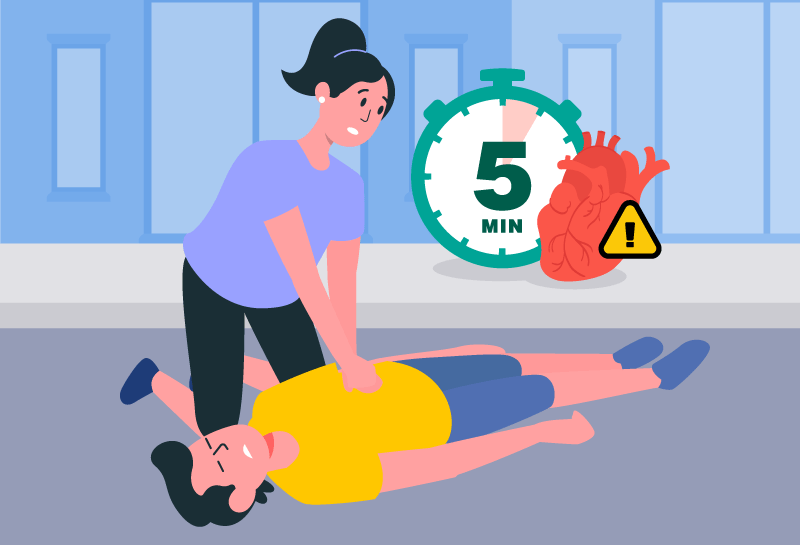
Lower the person carefully to the floor face-up, with arms by their sides. If you can clearly see the object in the mouth or throat, sweep it out with a finger. If there is no response, begin CPR with chest compressions and rescue breaths, checking the mouth regularly for obstruction.
If You Cannot Reach Around the Midsection
If you cannot get your arms fully around the person, use chest thrusts instead of abdominal thrusts. Place thrusts on the sternum (breastbone), just above where the lowest ribs meet, and apply firm thrusts.
If the Choking Victim Is an Infant Under 1 Year
Sit down and hold the infant face-down on your forearm, keeping the head lower than the trunk. Give 5 gentle but firm back blows with the base of your palm. If there is no response, turn the infant face-up on your forearm and place two fingers at the center of the breastbone. Deliver 5 quick chest compressions. Repeat back blows and chest compressions until breathing resumes or emergency help arrives.
Final Takeaway
At last, the person coughs and starts breathing again. You helped save a life because you knew what to do. Choking is one of the leading causes of accidental death, but it is also one of the most preventable. Reading guides is a strong first step, and formal certification is even better.
Consider taking a CPR and first-aid course through the American Red Cross or the American Heart Association. Do not wait to learn until it is too late.